Contents
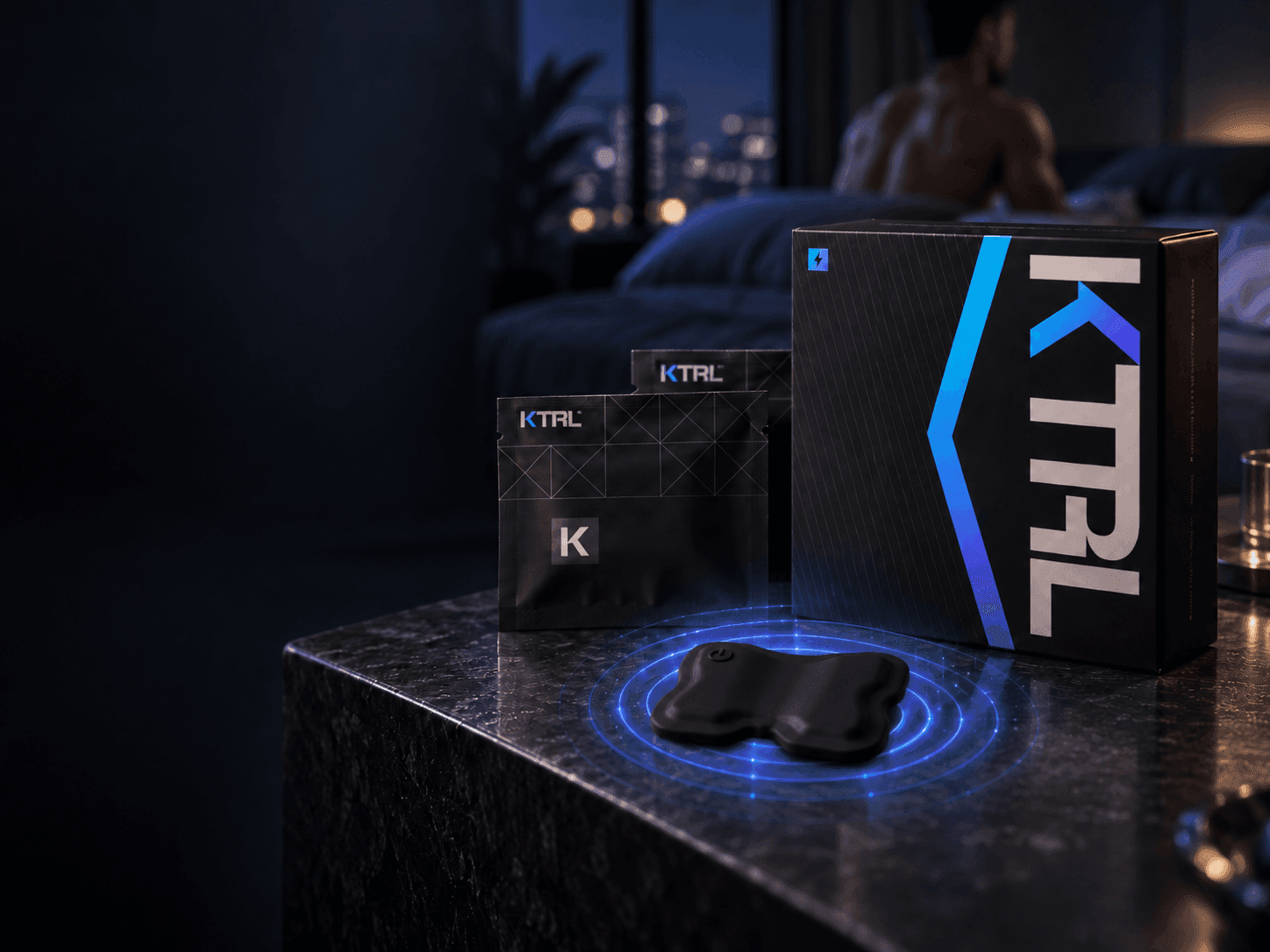
KTRL's rhythmic physical sensation does not establish that it delays ejaculation or adds a particular number of minutes. KTRL Portable Smart Patch, model WDC201, is a single-use consumer electronic sensory product for external skin contact. You can consider whether you want its sensation, while keeping that preference separate from an expectation of longer intercourse. Its 30-minute powered-on limit is a use restriction, not a promised duration.
By KTRL | Updated: 14 October 2026
Does KTRL help you last longer?
You should not choose KTRL on the assumption that it will make ejaculation happen later. Its established product role is to add rhythmic physical sensation; that role does not demonstrate a delay effect.
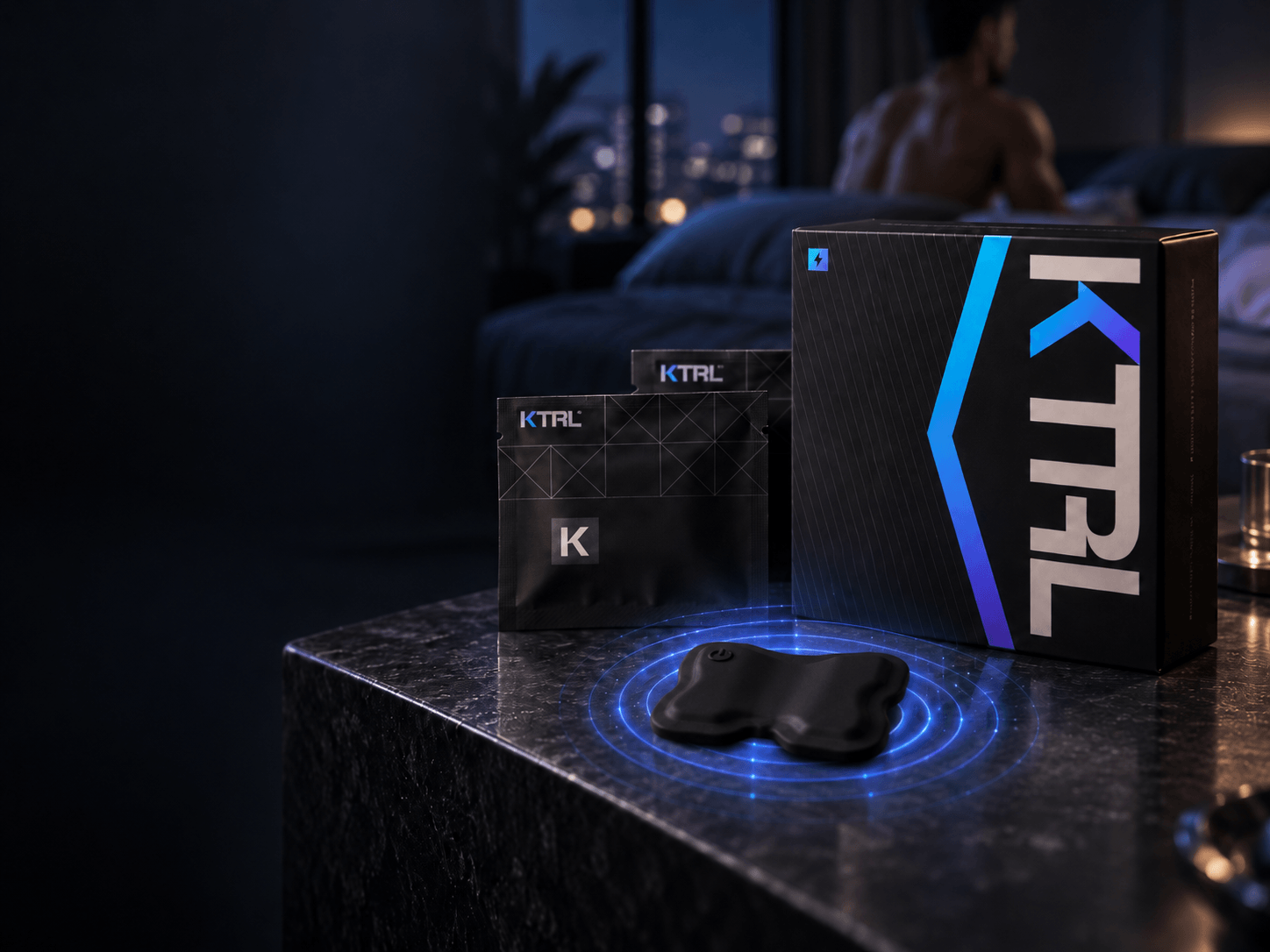
The KTRL Portable Smart Patch product information describes controlled electrical pulses that create a repeating sensation through external skin contact. WDC201 is self-contained and single-use. Those features describe its sensory function and format; they do not establish longer intercourse, delayed orgasm, improved ejaculation control or earlier awareness of arousal.
A noticeable sensation is not a duration measurement
Noticing a rhythmic feeling tells you about sensation on that occasion. When ejaculation occurs is a separate observation. A clear rhythm can be present while timing remains unchanged.
Enjoying the added feeling is a personal preference. You can also decide that you do not want it, without measuring every encounter or calculating a duration.
A pacing idea is not proof of a timing effect
You might choose to treat a noticeable cue as a reminder to pause. That is a decision about attention; it does not establish that KTRL improves awareness, makes a pause effective or changes ejaculation timing.
A phrase such as "may support pacing" describes a possibility, not a demonstrated result. General electrical-stimulation research, operating instructions and an electromagnetic-compatibility certificate do not, by themselves, demonstrate that this specific patch delays ejaculation.
For optional personal noticing prompts, read rhythmic sensation and rising arousal. Those prompts are not a validated test or a measurement of arousal.
Keep sensation and timing observations separate
An observation can describe what happened to you, but it cannot establish a reliable product effect. Setting, attention, other stimulation and expectations may all differ between occasions. Later ejaculation on one occasion does not identify KTRL as the cause or predict a repeatable benefit.
What a personal observation can and cannot tell you What you observeWhat it tells youWhat it does not establish You notice the repeating sensationThe cue was noticeable to you on that occasion.Longer time before ejaculation. You like the feelingA personal sensory preference.Improvement in sexual function. You choose a pause while wearing itA choice you made.That the patch caused better control. Ejaculation occurs later or earlierWhat happened on that occasion.A reliable product effect. Timing does not changeNo timing difference was noticed.A reason to extend use or alter placement.The table separates observations from conclusions; it is not a test of sexual function or product suitability. If you want to make a note afterwards, record what you noticed, whether you wanted the feeling and whether an instruction was unclear. There is no need to force a score.
If you enjoyed the sensation without a timing difference, see what if you enjoy KTRL's sensation but notice no timing change?
The 30-minute limit is a product rule
The maximum is 30 minutes of cumulative powered-on time during the same use, not 30 minutes of promised intercourse or a target for ejaculation. The KTRL user guide excludes switched-off intervals from the total. Switching on again continues the previous total; it does not create a fresh allowance.
You can finish earlier. Do not extend use, move the patch to an uninstructed location, fold it or modify it to pursue a timing result. KTRL is single-use and cannot be saved for a later session.
Pauses do not reset the allowance
Keep track of the cumulative powered-on total when pausing. For any permitted same-use repositioning, switch off before removing or adjusting the patch and follow the instructed placement. A pause is not permission to ignore a stopping signal.
For the operating rules, read KTRL with pacing, pauses and stop-start routines. Combining a routine with the patch does not establish a proven combined treatment.
Stop-use signals override every timing result
Pain, stinging, burning, redness, swelling, itching or other obvious discomfort: stop immediately, switch off and gently remove the patch as directed. If symptoms persist, discontinue further use and seek qualified advice.
A damaged or abnormal product: stop using it and contact KTRL Support. Product support does not replace healthcare advice for symptoms.
A preferred timing observation never justifies continuing through symptoms. The intended wearer must be a man aged 18-60, inclusive, and all do-not-use conditions still apply. Read the complete supplied warnings and the suitability and use restrictions; being within the age range alone does not establish suitability.
When ejaculation timing needs its own assessment
A recurring, unwanted ejaculation-timing concern deserves its own healthcare assessment. Do not rely on a sensory experiment to identify its cause or treat it.
The European Association of Urology guideline on ejaculation disorders considers timing alongside perceived control, distress, interpersonal difficulties and the pattern of the concern. A duration measurement alone is not enough to define premature ejaculation.
The NHS guidance on ejaculation problems advises seeing a GP for a persistent problem. These sources explain general assessment; they do not demonstrate a KTRL benefit.
KTRL is not a medical device or treatment and is not intended to diagnose, treat, cure or prevent a disease or medical condition. Interest in rhythmic sensation can guide a sensory preference, while a concern about ejaculation timing needs a separate decision about professional help.
Frequently asked questions
Does feeling KTRL's rhythm mean I will ejaculate later?
No. Noticing the cue is an observation about sensation. It does not establish how long it will take you to ejaculate or whether the timing will change.
Does the 30-minute limit mean KTRL adds 30 minutes?
No. It is the maximum cumulative powered-on time during the same use, not a promised delay or a target for intercourse. Switched-off intervals do not count, and restarting continues the same total.
Does choosing a pause show that KTRL improved my control?
A pause is a choice you made. That choice alone does not demonstrate improved control or a timing effect caused by the patch.
What if I like the feeling but timing does not change?
You can value the sensory experience without treating it as a timing benefit. Unchanged timing is not a reason to extend the limit, change placement or keep using a patch after a stopping signal.
Sources
KTRL. KTRL Portable Smart Patch. WDC201 product format and intended sensory function. Accessed 14 October 2026.
KTRL. KTRL Patch User Guide. Use restrictions, stopping rules, pauses and cumulative powered-on limit. Accessed 14 October 2026.
European Association of Urology. Disorders of Ejaculation. Sexual and Reproductive Health Guidelines. General assessment context. Accessed 14 October 2026.
NHS. Ejaculation problems. General information and advice on persistent concerns. Last reviewed 9 February 2023; accessed 14 October 2026.
The clinical sources provide general health context, not evidence that KTRL delays ejaculation.