Contents
Performance anxiety, ejaculation timing concerns and erection difficulties can overlap. You do not need to choose a diagnosis before asking for help. Start by describing what bothers you: feeling watched or judged, ejaculating sooner than wanted, fearing an erection will fade or noticing a persistent change. That description can guide a conversation with a partner or qualified professional. A sensory product cannot distinguish the causes or determine which concern needs attention.
By KTRL | Updated:13 October 2026
Performance anxiety or timing concern: four starting points
Start with the observation that is bothering you most. More than one row may fit; you can explain the overlap instead of forcing the experience into one category.
This table helps you choose a conversation or reading topic. It is not a validated diagnostic tool, a treatment plan or a test of product suitability.
Four observations and a useful next step for eachMain observationA useful next stepWhat it does not establishWorry, monitoring or pressure dominates the momentDiscuss what activity is wanted and whether either person wants to pause. Seek support if distress persists.That the concern is exclusively psychological.Ejaculation timing or perceived control is the concernDescribe the pattern, context and effect on you to a qualified professional if it is recurring or distressing.A diagnosis from one duration.Fear of losing firmness makes you rushDescribe the erection change separately from the pace you choose.That rushing or a sensory cue will maintain an erection.A change is persistent, sudden, painful or otherwise concerningSeek appropriate healthcare advice rather than another product experiment.A cause identified by this table.When pressure dominates the moment
Worry matters, but noticing it does not prove that the concern is entirely psychological. The NIDDK guidance on symptoms and causes of erection difficulties includes anxiety, stress and depression alongside physical and medicine-related factors. Feeling anxious does not rule those other contributors out.
For words to discuss the situation without creating another performance demand, read stress, anxiety and relationship pressure during intimacy.
When ejaculation timing or control is the concern
A duration alone does not diagnose premature ejaculation. The European Association of Urology guidance on disorders of ejaculation considers perceived control, distress and the pattern over time alongside timing. Tell a professional what happens and how it affects you, rather than relying on a stopwatch figure.
Slowing down or taking a freely agreed pause is an activity choice. It does not become a validated treatment because a product is also present. The comparison of KTRL with behavioural timing methods explains that distinction.
When fear of losing an erection makes you rush
If an erection begins and then becomes less firm, describe that sequence. If fear makes you rush, describe that separately. Neither observation establishes that the fear caused the erection change or that a faster pace will preserve firmness.
Read why fear of losing an erection can lead to rushing for communication prompts. If erections differ between solo and shared activity, the masturbation and partnered-sex comparison explains the research and its limits.
How to describe the concern and talk with a partner
A useful description says what happens, in what setting and how it affects you. You do not need to reproduce the difficulty, compare yourself with another person or prove that it happens in every setting before asking for help.
Details to take to a healthcare conversation
The NIDDK description of erection assessment includes medical, sexual and mental-health history, a physical examination and tests when appropriate. Assessment is broader than one performance score. Useful details to describe include:
When it began: whether this is a recent change or a pattern you have noticed for longer.
When it recurs: the activities or settings in which you notice it, without treating one setting as proof of the cause.
What happens first: worry, rushing, ejaculation or a change in erection firmness. Describe their order if you can.
How it affects you: distress, pressure, avoidance or another concern you want assessed.
Other changes: pain, medicines, supplements, recent treatment changes and any other relevant health detail.
Words for a conversation with a partner
You might say: "I am worried about my response and do not want that to become pressure on either of us. Can we decide what we actually want to do?"
This wording is a communication prompt, not an anxiety treatment shown to improve sexual function. Either person may prefer to pause or finish. Consent to an activity is not consent to being evaluated or using a product.
Where KTRL WDC201 fits, and its use limits
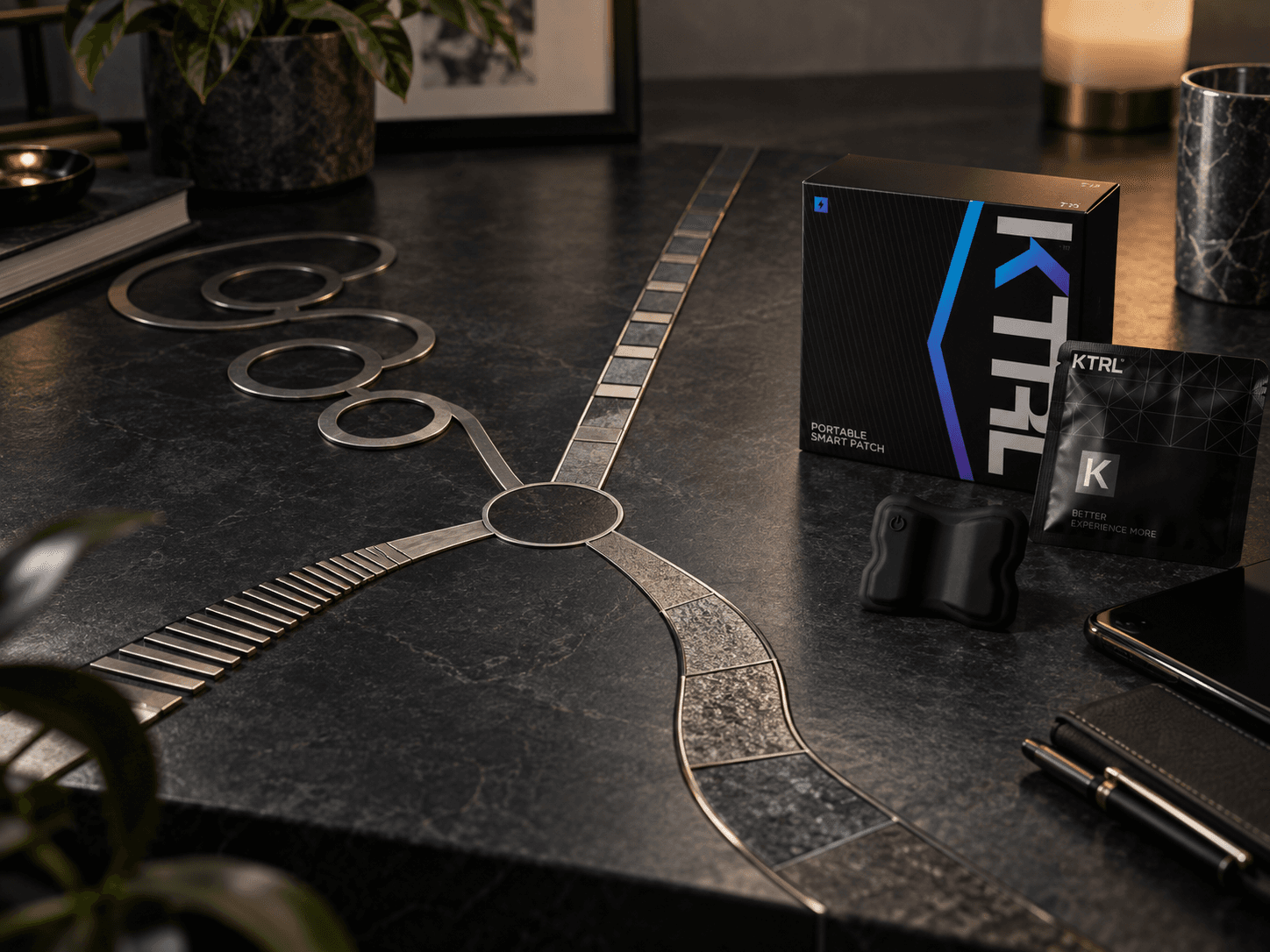
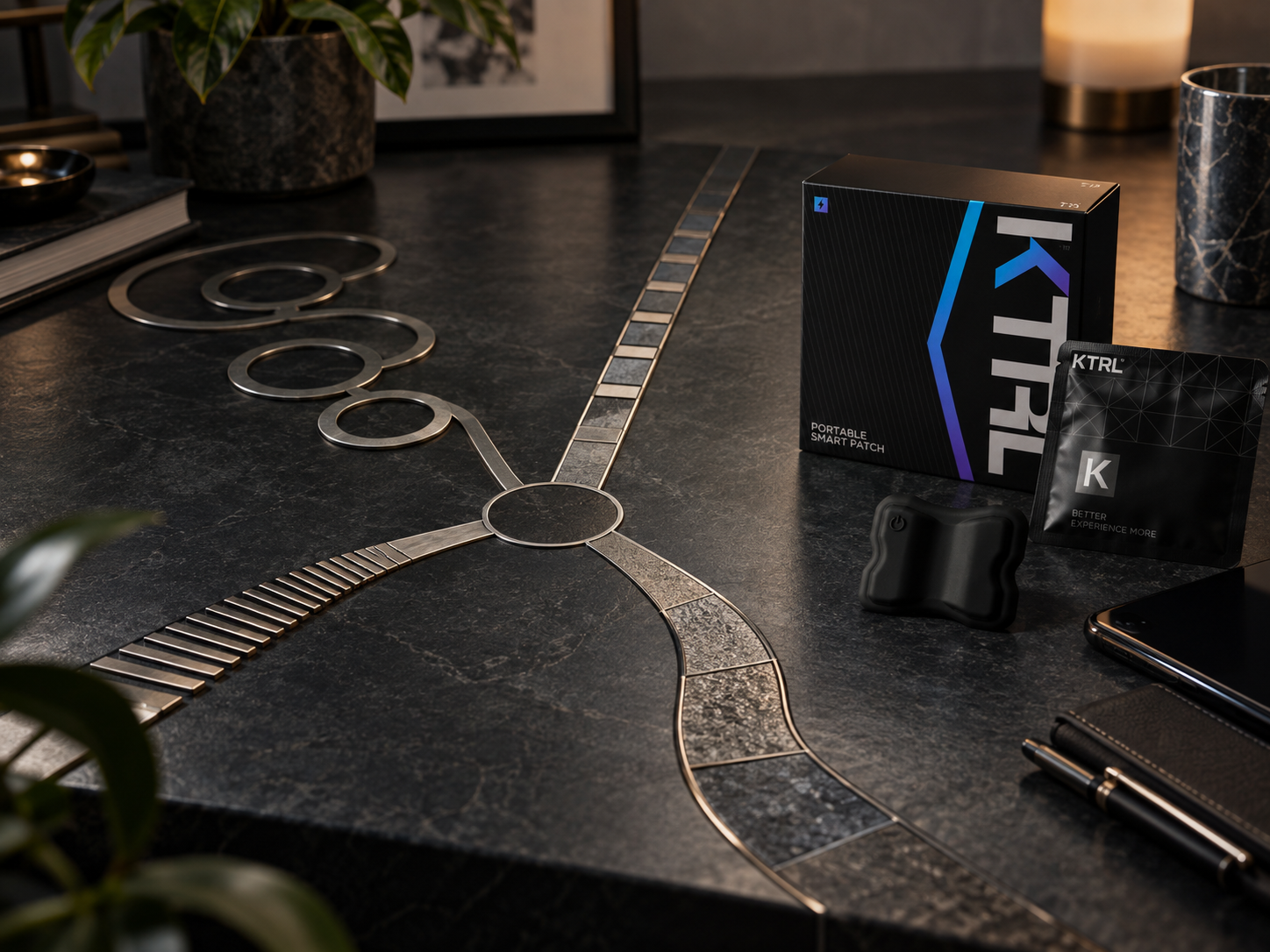
KTRL Portable Smart Patch, model WDC201, is a single-use consumer electronic product that creates rhythmic physical sensation through external skin contact. An interest in added sensation is separate from seeking help with anxiety, ejaculation timing or an erection change.
Its product information does not establish that KTRL identifies the main cause, treats anxiety, controls ejaculation or maintains an erection. KTRL is not a medical device and is not intended to diagnose, treat, alleviate, monitor or prevent a disease or medical condition.
Check suitability, consent and instructions first
The intended wearer must be a man aged 18-60, inclusive, meet the product restrictions and be able to follow the instructions. Everyone involved must freely agree and remain free to stop. Check the KTRL suitability and use restrictions before considering use.
A known do-not-use condition, missing consent or inability to follow the instructions prevents use. Resolve health and operating questions first. An unresolved health concern is a reason to seek advice, not a reason to purchase the patch.
Track powered-on time and adjust only during the same use
No more than 30 minutes of cumulative powered-on time during the same use. Switched-off intervals do not count. Restarting continues the previous total; it does not reset it. Track the total yourself.
An activity pause still counts if the patch remains on. Pausing the activity is different from switching the product off.
Switch off before a permitted adjustment. Removal and reattachment during the same use are allowed to correct inadequate adhesion or position. Switch off before removal. Reattachment does not permit reuse in a later session.
Bend gently only to fit the skin. Excessive bending or folding is not permitted.
Stop immediately for discomfort or a product fault
Pain, stinging, burning, redness, swelling, itching or other obvious discomfort means stop immediately, switch off and gently remove the patch. If discomfort persists, discontinue further use and consult a qualified healthcare professional.
Stop using an abnormal or malfunctioning product and contact KTRL Support. For the operating sequence, read the full first-use checklist and the KTRL user guide.
Choose the right next conversation
Choose support according to the concern you want addressed. You can ask for help without buying a product or first deciding which diagnosis applies.
A health or sexual-response concern: seek qualified assessment when it is recurring or distressing. A persistent, sudden, painful or otherwise concerning change also deserves appropriate healthcare advice.
Relationship pressure: consider appropriate relationship or sexual-health support. Emotional concerns can be discussed alongside physical changes.
An unclear product instruction or fault: contact KTRL Support. Product support handles operating questions; symptoms need appropriate healthcare advice.
The guide to stopping product experiments and seeking professional advice explains when another trial should give way to assessment. Describing the overlap between pressure, timing and erection changes is a useful starting point.
Frequently asked questions
Can performance anxiety and ejaculation timing concerns happen together?
Yes. Pressure, timing and erection difficulties may overlap. Noticing anxiety does not exclude physical or medicine-related factors; describe all the concerns that matter to you.
Does ejaculating sooner than wanted always mean premature ejaculation?
No. One duration does not establish a diagnosis. Perceived control, distress and the pattern over time are also relevant to professional assessment.
What should I describe if fear of losing an erection makes me rush?
Describe the change in firmness and the decision to rush separately, including which you noticed first. That sequence does not by itself establish the cause or show that rushing maintains an erection.
Can KTRL tell me which problem I have?
No. KTRL is a consumer sensory product, not a diagnostic tool. Its product information does not establish treatment of anxiety, ejaculation control or erection maintenance.
Sources
National Institute of Diabetes and Digestive and Kidney Diseases. Symptoms & Causes of Erectile Dysfunction. Last reviewed October 2024; accessed 13 October 2026.
European Association of Urology. Disorders of Ejaculation. Sexual and Reproductive Health Guidelines, sections 6.2.4-6.2.5. Accessed 13 October 2026.
National Institute of Diabetes and Digestive and Kidney Diseases. Diagnosis of Erectile Dysfunction. Last reviewed October 2024; accessed 13 October 2026.
KTRL. KTRL Patch User Guide. Product purpose, restrictions and operating instructions for WDC201. Accessed 13 October 2026.
The clinical sources explain assessment and possible contributors. They do not establish KTRL's effects or validate the table and communication prompt as diagnostic or treatment tools.