Contents
How to Use KTRL for the First Time: WDC201 Checklist
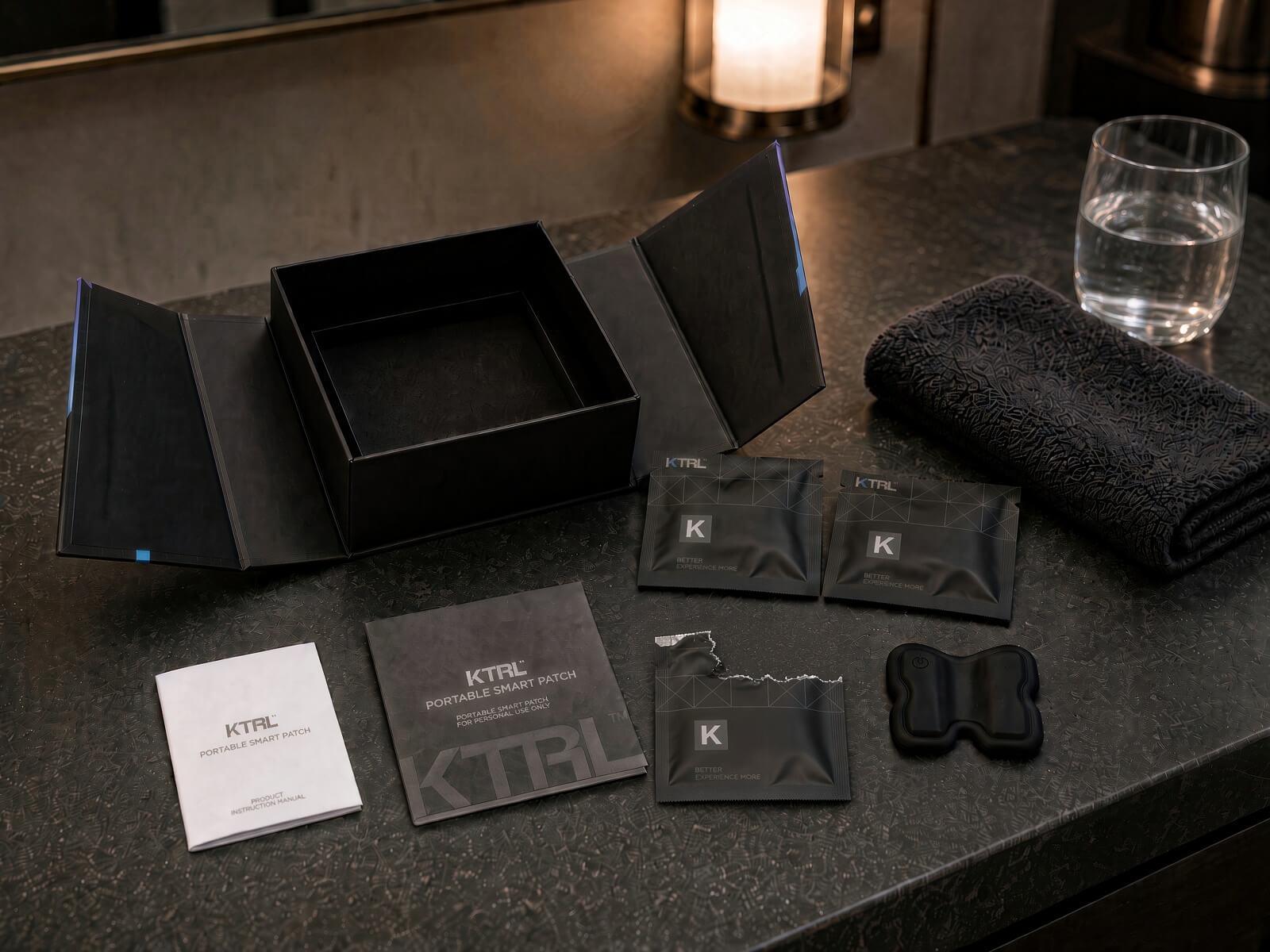
To learn how to use KTRL for the first time, start with the use restrictions, then prepare the skin, check the patch's position and track each powered-on interval. KTRL Portable Smart Patch, model WDC201, is an external skin-contact consumer electronic product. Its limit is 30 minutes of cumulative powered-on time per session; stop sooner whenever you choose, and immediately if discomfort occurs. 1
By KTRL | Updated:12 October 2026
This checklist applies to men aged 18–60, inclusive. Read the complete product instructions before opening the patch. If your model or supplied instructions differ, clarify the discrepancy with KTRL Support before use.
Before you use KTRL WDC201: suitability and preparation
Start only if no do-not-use condition applies, you can follow the instructions and you freely want the experience. In a shared experience, consent must continue throughout; anyone can request a stop.
Check the do-not-use conditions
Do not use the patch in any of these circumstances. 1
You are under 18 or over 60.
The application area has wounds, damage, ulcers, redness, swelling, infection, inflammation or another abnormality.
The area has unusual sensitivity, intolerance to stimulation or other abnormal reactions.
You have a known sensitivity or allergy to the skin-contact materials.
You have a history of significant cardiovascular disease or another relevant serious health risk.
You use implanted, interventional or other electronic stimulation equipment.
You have peripheral nerve or sensory abnormalities.
The product has visible damage, a cracked casing, unusual heating or another abnormal condition.
You are bathing, swimming, using a sauna or in another wet environment, or in an oxygen-rich environment.
You are driving, operating machinery or sleeping.
You are receiving treatment or taking medicines that may affect skin sensation, local responses or the judgement needed for safe use.
The application area has undergone surgery or treatment, or is still recovering.
Take a health-related uncertainty to a qualified healthcare professional and an unclear product instruction to support. The guide to KTRL suitability and use restrictions explains how to choose the appropriate next step.
Prepare the product and skin
Prepare and apply the patch 3–5 minutes before intercourse. This is preparation guidance, not a promised time for an effect. 1
Check that the packaging is intact and the patch is undamaged.
Make sure the intended skin area is clean, dry, intact and free of abnormalities.
Trim excess hair if necessary, without damaging or irritating the skin.
Keep the release liner in place until you are ready to apply the patch.
Have a way to record each powered-on interval, including any restart during the same session.
Cleaning the skin or preparing carefully does not override a use restriction.
Place the patch in the instructed position
Apply the patch to the external perineal skin between the scrotum and anus, with the power button towards the scrotum and the rear edge approximately 2 cm from the anus. Do not insert it or place it on the anus or other mucosal tissue. 1

Remove the release liner to expose the skin-contact surface.
Check the direction: the power button points towards the scrotum.
Check the distance: place the rear edge approximately 2 cm from the anus. Measure from the rear edge, not the centre or button.
Press firmly for 10 seconds to secure skin contact.
You may gently bend the patch to fit the skin. Do not fold it or bend it sharply or excessively. If you cannot identify the area or orientation confidently, leave it switched off and clarify the placement first. For more detail, read where to apply KTRL and how to prepare your skin.
Switch on and track cumulative powered-on time
Hold the power button for at least one second to switch on, then start counting time. Keep the total at or below 30 minutes of powered-on time in the same session, including any restart. Thirty minutes is a limit, not a target. 1
Monitor comfort, the condition of the patch and whether you still want to continue. A rhythmic sensation does not confirm correct placement or mean that continuing is appropriate.
How pauses and adjustments affect the same sessionWhat happensWhat to doActivity pauses, but the patch stays on.Keep counting powered-on time.You switch the patch off.Do not count the switched-off interval.You switch it on again.Continue the previous total; the allowance does not restart.Adhesion or position needs adjusting.Switch off before removal, then reattach in the instructed position during the same session.For example, 10 minutes on + a powered-off pause + 10 minutes on = 20 minutes of cumulative powered-on time. The pause does not give you a new 30-minute allowance. Track the total yourself; do not assume an automatic timer or shut-off function.
If you need to adjust the patch
Hold the button for at least three seconds to switch off before removing it. Reattach only to correct adhesion or position during the same use. If proper adhesion cannot be achieved, or the product is damaged or abnormal, stop using it and contact support. Reattachment does not reset the time limit or permit later-session reuse. 3
Stop, remove and dispose of the patch
Stop immediately for pain, stinging, burning, redness, swelling, itching or other obvious discomfort. Switch off and gently remove the patch; do not wait until the sensation becomes intolerable or continue to reach the time limit. 1
If discomfort persists, discontinue further use and consult a qualified healthcare professional. If the product malfunctions, becomes unusually hot, swells, leaks or shows damage or another abnormality, stop using it and contact support. You may also stop simply because you no longer want the sensation or activity.
Finish the session
Hold the power button for at least three seconds to switch off.
Gently remove the patch.
Do not save the worn patch for another session, even if you used it only briefly.
Keep it away from children and pets, and follow local disposal requirements for battery-containing electronics. Ask your local waste service if you are unsure where to take it.
Do not wash or soak the patch for reuse, recharge it, dismantle it, puncture it, crush it or burn it. The article Can KTRL Be Reused After One Session? explains the difference between a permitted adjustment and prohibited later reuse.
Frequently asked questions
The first-use routine depends on placement, comfort and the cumulative time limit. These answers clarify common points without replacing the complete instructions.
Do I need to keep KTRL on for 30 minutes?
No. Thirty minutes is the maximum cumulative powered-on time during one session. You may finish earlier, and discomfort requires stopping immediately.
Does switching off reset the time limit?
No. Switched-off time does not count, but switching on again continues the previous total. A pause never creates a fresh allowance.
Can I reposition the patch if it does not stick properly?
Yes, an adjustment is permitted during the same use after switching off. If proper adhesion cannot be achieved, stop and contact support; do not keep adjusting to continue through discomfort.
Can I use the same patch again tomorrow?
No. KTRL is single-use. A short session, remaining stickiness or apparent battery power does not make a worn patch suitable for another session.
KTRL is a consumer electronic product for external skin-surface contact only. It is not a medical device and is not intended to diagnose, treat, alleviate, monitor or prevent any disease or medical condition. This checklist explains product handling, not a clinical benefit.
References
The handling instructions are based on KTRL's product guidance. Linked sources were accessed on12 October 2026.
KTRL. WDC201 User Guide. Preparation, placement, button operation, restrictions, cumulative powered-on time and single-use handling. The page identifies its basis as the English 3c instructions updated 22 May 2026 and the confirmed website instructions.
KTRL. Placement diagram. The original schematic reproduced above; not to scale.
KTRL. Can KTRL Be Reused After One Session? Same-use adjustments, cumulative timing and the prohibition on later-session reuse.
KTRL. 3c final bilingual printed guide for WDC201, English text updated 22 May 2026, supplemented by confirmed use rules as of 10 October 2026. The English text governs where the two languages differ. For clarification of supplied instructions, contact KTRL Support.