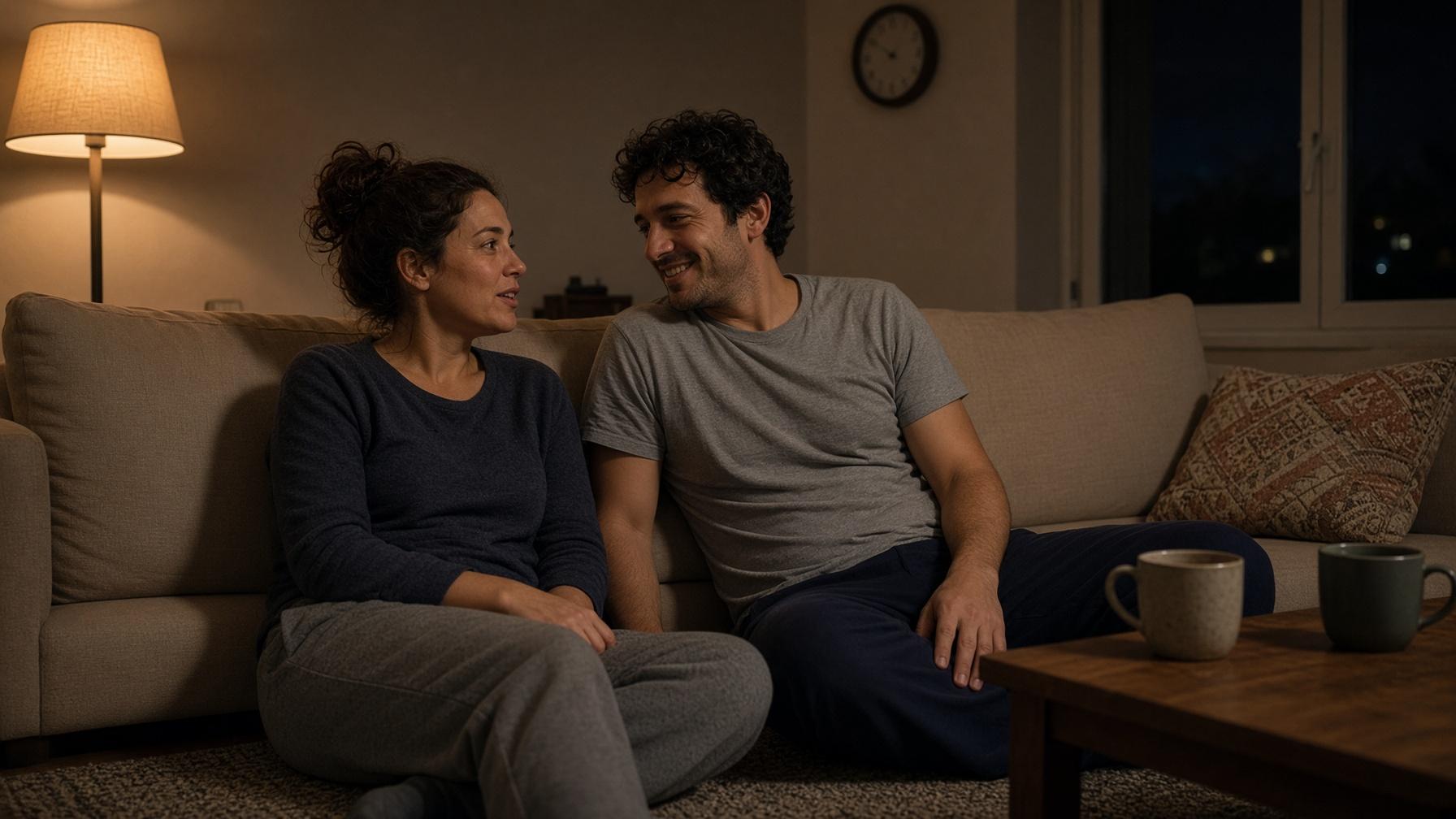
You look at the clock afterwards and feel mildly surprised. Perhaps much more time has passed than you expected. Perhaps an experience that felt substantial occupied only a short interval. Both reactions can happen because noticing time, remembering time and measuring time are different tasks.
During sex, attention, emotion and the events you remember can affect your sense of duration. Being absorbed may leave little attention for the clock; monitoring how long something is taking may make time more prominent. Afterwards, your estimate is reconstructed from memory. None of these experiences provides a precise stopwatch reading.
That is an explanation of subjective time, not a formula saying good sex always feels short or strong arousal always makes minutes stretch. Research on time perception shows a more complicated picture. The direction of an effect depends on the task, the situation and what someone is being asked to judge.
The clock answers only one question
Clock time is the interval between a chosen start and finish. Even that definition requires agreement. One person may think of the whole evening of intimacy; another may be thinking of one particular part. If two people estimate different durations, they may be remembering different intervals rather than disagreeing about the same event.
Subjective duration is how long the interval seemed. The felt passage of time is slightly different again: time can seem to fly, drag or disappear from awareness. You can be aware that an evening passed quickly while also feeling that it contained a great deal. Those impressions are not mutually exclusive.
This distinction matters when time becomes a measure of success. “That felt brief” might mean “I wanted more unhurried attention”, rather than “I believe the clock recorded too few minutes”. A numerical answer can miss the actual concern if the person is talking about pace, completeness or how abruptly the experience ended.
Agree on what you are remembering
In a hypothetical conversation, one partner says, “We were together for ages”, while the other says, “It was over very quickly”. Before deciding that one person is inaccurate, ask what each means. They might be describing different phases, different levels of engagement or different wishes about the ending.
You do not need to settle the exact duration to take both experiences seriously. “It felt rushed to me” deserves attention even when plenty of clock time passed. Equally, enjoying a short interval does not require a longer estimate to make that enjoyment legitimate.
Attention changes the task of noticing time
When you know you will need to judge a duration, you may attend to its passage. Researchers call this prospective timing. When you are asked afterwards about an interval you were not deliberately timing, you draw on what you remember; this is retrospective timing. The terms describe how the question is posed, not two kinds of person.
An analysis of prospective and retrospective timing reviews the challenge of explaining these judgements within a common model. Attention and memory help account for why occupying the mind can have different consequences depending on when the duration is judged. It is general timing research, not a study of how long sex feels.
Applied cautiously, the distinction offers a useful everyday explanation. During an absorbing experience, you may have little information about the passing minutes because you were attending to other things. Afterwards, you estimate from remembered moments. That estimate is not a hidden clock finally revealing its reading; it is a judgement made with different information.
Emotion does not move time in one direction
It is tempting to say excitement makes time fly. Sometimes that matches experience. At other times, an emotionally vivid moment seems unusually long. General research does not support one simple rule that applies to every emotional state or every duration task.
A review of emotion, interval timing and time perception examines how attention and arousal interact. The authors describe limitations in models that treat those influences too simply. Here, arousal means a broad state of activation; it is not automatically a finding about sexual arousal or partnered intimacy.
That boundary is important. A laboratory task involving emotional images or short intervals cannot tell you how your whole intimate experience should feel. It can explain why a statement such as “If you are really enjoying it, you will lose track of time” is too confident. Enjoyment and time awareness can coexist.
Nor is losing track of time proof of a deeper connection. Someone may remain aware of the hour because they have responsibilities afterwards while still feeling present and interested. Another person may become absorbed without finding the experience especially satisfying. Time perception is one feature of an experience, not its quality rating.
Remembering an experience is not replaying a recording
Afterwards, you may use changes, pauses, conversations and striking moments to estimate duration. The beginning and ending can stand out more than a continuous middle. A memory rich in events may feel substantial even when you did not notice time passing during the experience itself.
This does not mean you can calculate duration by counting memories. Memory is selective, and the relationship between remembered events and estimated time depends on context. The practical point is smaller: a later impression and an in-the-moment impression need not match because they are formed differently.
The same applies when you revisit an experience days later. What remains memorable may differ from what occupied your attention at the time. Repeatedly reviewing whether it lasted “long enough” can also make the question itself more prominent in your account. A remembered number may feel confident without having been measured.
Why checking can change the experience
Watching the clock introduces an additional task. You are now monitoring an interval as well as participating in intimacy. For some people, an occasional practical check is unremarkable. For others, checking becomes entangled with a target: enough minutes, enough progress or enough proof that the experience is going well.
The answer is not to ban clocks. Sometimes you have a genuine time constraint and need accurate information. A boundary about available time is different from a performance score. If you need to finish getting ready for work, a clock can answer that practical question more reliably than absorption can.
What helps is knowing why you are checking. Are you managing an appointment, trying to confirm a worry or looking for reassurance that your partner is satisfied? The first question has a time-based answer. The last usually needs a conversation. A longer interval does not tell you whether someone felt comfortable, heard or pleased.
Keep time awareness separate from memory loss
Ordinary absorption means you were aware of the experience but not closely tracking its duration. It is different from missing memories, confusion, loss of consciousness or feeling unable to account for what happened. Those experiences should not be romanticised as evidence of intense pleasure.
If you have unexplained gaps in memory or episodes of altered awareness, seek appropriate medical advice. If an experience involved intoxication or an inability to consent, the important questions concern safety and support, not how immersive it was. No account of subjective time should blur those distinctions.
For everyday differences in duration, try describing the quality you actually mean. “I felt unhurried”, “I wanted more time together” or “I became preoccupied with the clock” tells a partner more than an uncertain estimate. It also keeps a normal difference in perception from becoming an argument about whose memory is correct.
You can let the clock measure an interval and let your experience tell you how that interval felt. Neither has to replace the other. When the two seem surprising together, that often reflects the difference between measuring time and living through it—not a verdict on how well either of you performed.